
Chapter 1 · What The Body Is Saying: From Signals To Markers
1. Warning Signs: Sort Urgency Before Searching Disease Names
This page is not medical advice. It cannot replace diagnosis, treatment, medication decisions, stopping medication, screening decisions, or emergency judgment. If chest pain, fainting, stroke symptoms, severe pain, abnormal bleeding, trouble breathing, self-harm risk, suicide risk, or other warning signs appear, seek emergency care or contact local emergency services promptly.
The moments that unsettle a family are often not confirmed diagnoses. They are the moments when no one knows whether something is serious.
A father says his chest feels tight for a while and then it goes away. A mother is suddenly dizzy and slurring words. A partner has been emotionally collapsing for days and starts saying, "I do not want to live." A postpartum family member has chest tightness, headache, or bleeding. An older adult falls and insists nothing is wrong. A child becomes slower to respond after a high fever.
The most dangerous problem in those moments is not "not knowing medicine." It is putting the problem in the wrong layer: searching online when emergency care is needed, normalizing a problem that needs a clinician, or turning something that should be recorded and followed up into catastrophe.
Ordinary people do not need to diagnose themselves or family members, and should not try to. What you need is a sense of boundaries: what cannot wait, what needs timely clinical judgment, and what can be recorded, repeated, and brought into a conversation.
If you are already facing a concrete symptom and want a direct next-action table, you can first use Symptom Action Guide. This chapter explains the boundary principles behind it.
Why Families Hesitate
The first hesitation is treating "mild symptom" as "low risk." Some heart attacks, strokes, or serious infections are not dramatic at first, especially in older adults, people with diabetes, pregnancy/postpartum situations, or people who already have chronic disease.
The second hesitation is treating "the symptom went away" as "the problem went away." Brief slurred speech, one-sided weakness, or recurring chest pain or pressure may still need timely medical evaluation even if it improves for the moment.
The third hesitation is using search results as triage. Search can give you the lightest and scariest possibilities at the same time, but it does not know this person's age, underlying conditions, medications, vital signs, test results, or on-the-ground change.
The fourth hesitation is turning care into argument. Families often spend too long debating whether to go to the hospital. When warning signs appear, the family rule should be simple: get help first, discuss later.
Three Boundaries: Red, Yellow, Green
You can sort health problems into three action layers first: red for emergency care, yellow for timely clinician contact, and green for recording and follow-up.
These three layers are not diagnoses. They are action priorities. Once a red signal appears, or once you cannot tell whether waiting is safe, do not downgrade the situation to green because "it does not look that bad" or "it just got better."
Red: Emergency Care
The key words in this layer are: may threaten life, may cause irreversible harm, is rapidly worsening, or you cannot be sure that waiting is safe. In this layer, do not treat this book, search results, short videos, or relatives' experience as the care plan. Contact local emergency services or enter the emergency-care system promptly.
In the United States, this usually means calling 911 or going to a hospital emergency department; urgent care clinics may be appropriate for some time-sensitive but less severe problems, and mental health crisis support is available through 988. Poison Control can help with poison exposure guidance, but severe symptoms still require emergency services. Outside the U.S., use your local emergency number, crisis line, and emergency department system.
Remember a few entry signals first:
- chest pain, chest tightness, chest pressure, especially with shortness of breath, cold sweat, nausea, dizziness, or pain spreading to the arm, back, neck, jaw, or upper abdomen;
- sudden face drooping, one-sided limb weakness or numbness, slurred speech, trouble understanding, vision change, trouble walking, severe dizziness, or a sudden severe headache, even if it improves later;
- sudden loss of response, abnormal breathing, major mental-status change, not waking normally, seizure with poor recovery, severe breathing trouble, blue lips, or throat/chest tightness that makes breathing hard;
- uncontrolled bleeding, vomiting blood, coughing blood, black stool, large amounts of blood in stool, sudden severe pain, severe allergic reaction, serious trauma, poisoning, drowning, electric shock, or burns;
- clearly expressed thoughts of self-harm, suicide, or harming others, actions already taken, or a situation where the family cannot keep the scene safe;
- during pregnancy or within one year after birth: persistent or worsening severe headache, vision changes, fainting, chest pain, shortness of breath, severe abdominal pain, obvious bleeding, major decrease in fetal movement, or thoughts of harming oneself or the baby;
- infection followed by the whole person looking much worse, such as clear confusion, slower response, rapid breathing, cold or clammy skin, extreme pain or discomfort, very fast heart rate, weak pulse, or rapid decline, which should raise concern for serious infection or sepsis.
This is not a complete list. A fuller red-flag page is in Red Flags. If you want to sort common situations such as chest pain, fever, abdominal pain, falls, or emotional collapse, use Symptom Action Guide. Build one habit first: if you find yourself thinking "this person may not safely make it to tomorrow," "they may get worse on the way," or "I cannot move or watch them safely," do not keep reading as the way to decide.
Yellow: Contact A Clinician Soon
The key words in this layer are: it may not be an emergency, but it needs clinical judgment and should not be explained away.
For example:
- symptoms persist, recur, or gradually worsen;
- a checkup or test result is clearly abnormal, especially if it is very different from prior results;
- new neurologic problems appear, such as numbness, weakness, obvious memory decline, unstable walking, or repeated falls;
- palpitations, chest discomfort, shortness of breath, or fatigue recur but do not meet the red emergency line;
- sleep, mood, anxiety, or depression keeps affecting work, school, caregiving, or relationships;
- a medication causes clear discomfort, a side effect is suspected, or the person is unsure whether several medications can be taken together;
- an older adult has a fall, clear appetite or weight change, cognitive change, or decline in daily function;
- chronic markers are repeatedly abnormal, or the family does not know how to repeat, record, and follow them over time.
The correct action in this layer is not "find the answer." It is "prepare information and arrange clinical judgment." Record the symptom timeline, prior history, medications, allergies, test results, and the questions you most need answered, then contact primary care, an urgent care clinic, a nurse advice line, telehealth, a specialist office, or another local care entry point.
Green: Record And Follow Up
The key words in this layer are: currently stable, no warning signs, and recording can improve the next conversation.
For example:
- a lab result or screening result has a mild abnormality, but there are no warning signs, and you need to understand trend and repeat testing;
- blood pressure, glucose, weight, sleep, activity, or another long-running marker needs tracking over time;
- a mild symptom happens once, does not worsen quickly, and can be recorded with time, trigger, duration, and what helped;
- you want to discuss screening, vaccines, lifestyle, or chronic disease management with a clinician, but there is no current emergency.
Recording and follow-up are not the same as delay. Their value is turning vague feelings into information a clinician can use, and keeping the family from being pulled around by one number or one symptom.
But green is not permanent, and it is not a guarantee that "we can handle this ourselves." Green usually requires all of these to be true: no red warning signs; not an infant, pregnancy/postpartum person, older adult, immunocompromised person, or person with serious underlying disease; symptoms are mild, brief, and improving; the person can breathe, drink, communicate, and complete basic activity. If symptoms worsen, recur, do not improve, happen in a higher-risk person, or make family members feel clearly that something is wrong, upgrade to yellow or red.
Set The Family Rule First: Do Not Debate Red Flags
Every family should set one simple rule first: red flags are not debated.
This rule does not need a fight. It can sit on a shared visual. Family members read in order: first rule out what cannot wait, then what cannot be dragged out, and only then discuss whether short observation makes sense.
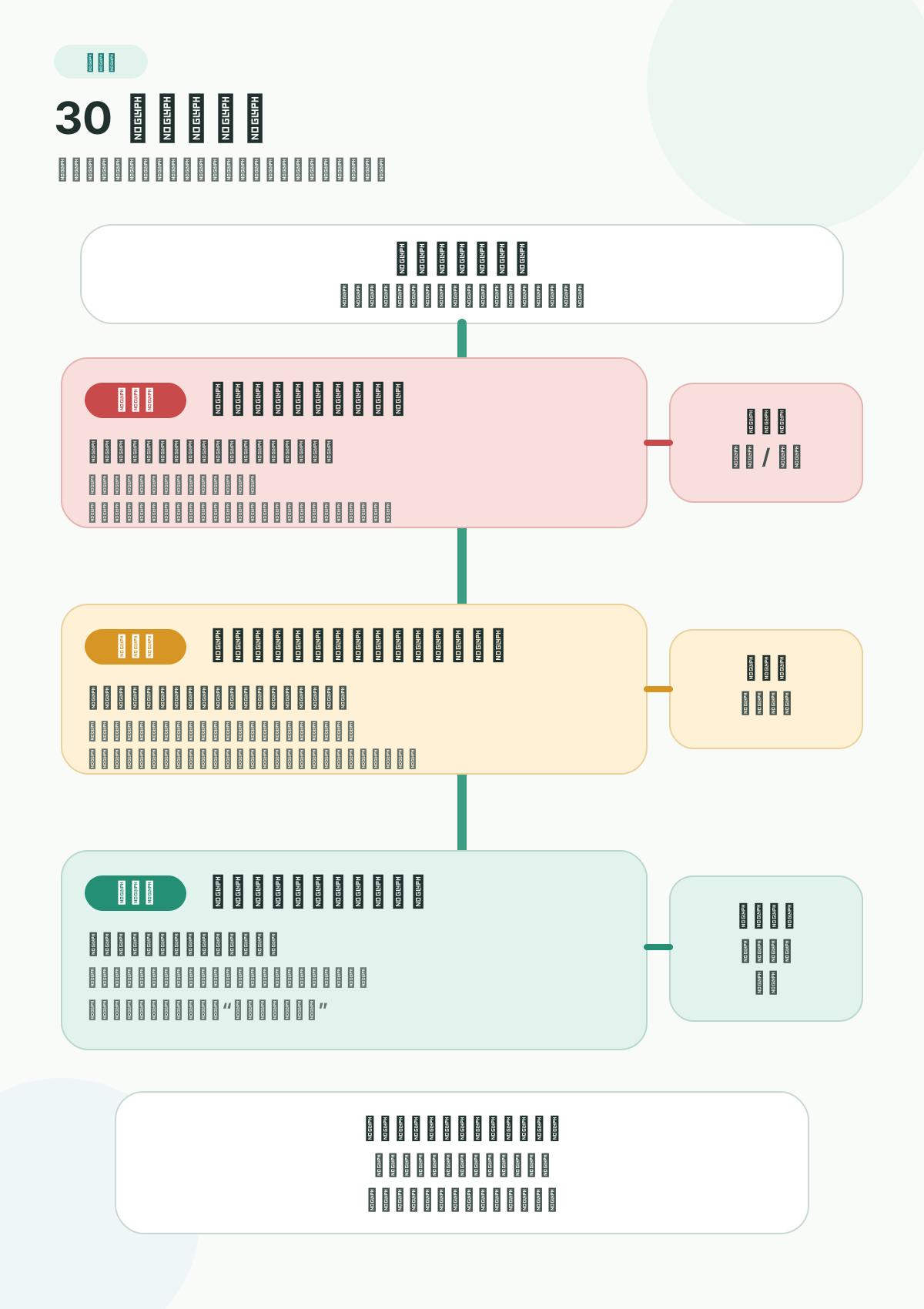
Green in the figure only means short-term recording and watching may be reasonable. It does not mean "safe." Higher-risk people, unclear causes, or a family member's strong sense that something is wrong should move the situation back to the first two questions.
What family members need to coordinate is not who knows more. It is work division: who contacts emergency help, who brings IDs and records, who notes the time symptoms began, who watches children or older adults, and who prepares medication and allergy information.
The Most Useful Information Before Care
If the situation allows, prepare these before emergency care or a clinic visit:
- when the symptom started, and whether it began suddenly;
- how the symptom has changed, whether it is worsening, and whether it has recurred;
- whether there are warning signs such as chest pain, trouble breathing, altered consciousness, one-sided weakness, abnormal bleeding, or self-harm risk;
- prior diagnoses, surgeries, and allergies;
- prescription medications, over-the-counter medications, supplements, and herbs currently being used;
- recent test results, lab results, imaging, or discharge summaries;
- the 1-3 questions you most want the clinician to help answer this time.
If stroke is possible, try to note the earliest time symptoms appeared. If it is a mental health crisis, do not leave the person alone, and contact professional crisis support or emergency services promptly.
Three Things You Can Prepare Today
Write down your local emergency number, nearby hospital emergency departments, usual clinics, primary care entry points, crisis lines, and mental health support lines on a family emergency information page.
Make a minimum medical information sheet for each family member: chronic conditions, allergies, long-term medications, major medical history, and emergency contact.
Agree on one sentence in the family chat: red triggers are not debated; get help first.
Then put Red Flags at the front of your family health record, and keep Symptom Action Guide for the moments that do not look like emergencies but still leave you unsure whether waiting is safe.
Public Sources
As of 2026-06-28, this chapter mainly uses these sources to calibrate warning-sign boundaries:
- American Heart Association: Heart Attack, Stroke and Cardiac Arrest Symptoms
- NHLBI/NIH: Heart Attack Symptoms
- CDC: Signs and Symptoms of Stroke
- MedlinePlus: Recognizing medical emergencies
- SAMHSA: 988 Suicide & Crisis Lifeline
- CDC HEAR HER Campaign: Urgent Maternal Warning Signs and Symptoms
- CDC: About Sepsis
- Poison Control: Poison Control
More source entries are in the source registry. This book's evidence rules are in the evidence policy.
These sources are used to calibrate "when reading and watching are no longer enough." They should not be turned into a self-diagnosis table, and they cannot replace local emergency care, emergency departments, or clinical triage.
Summary
- The most important task for ordinary people is not diagnosing, but sorting emergency red lines, timely clinical care, and recording for follow-up.
- Mild symptoms, symptoms that improve, or search results that look less frightening do not automatically mean low risk.
- When red warning signs appear, do not debate. Get help first.
- Yellow situations need prepared information and clinician judgment.
- Green recording is not delay. It makes the next conversation clearer.
The first lesson of Health Decisions for Families is not learning to practice medicine on yourself. It is knowing when you should no longer rely on yourself alone.
Reading Navigation
- Book contents
- Previous chapter: Start Here
- Next chapter: 2. Healthspan: Who Is Your Body Counting Down For?